
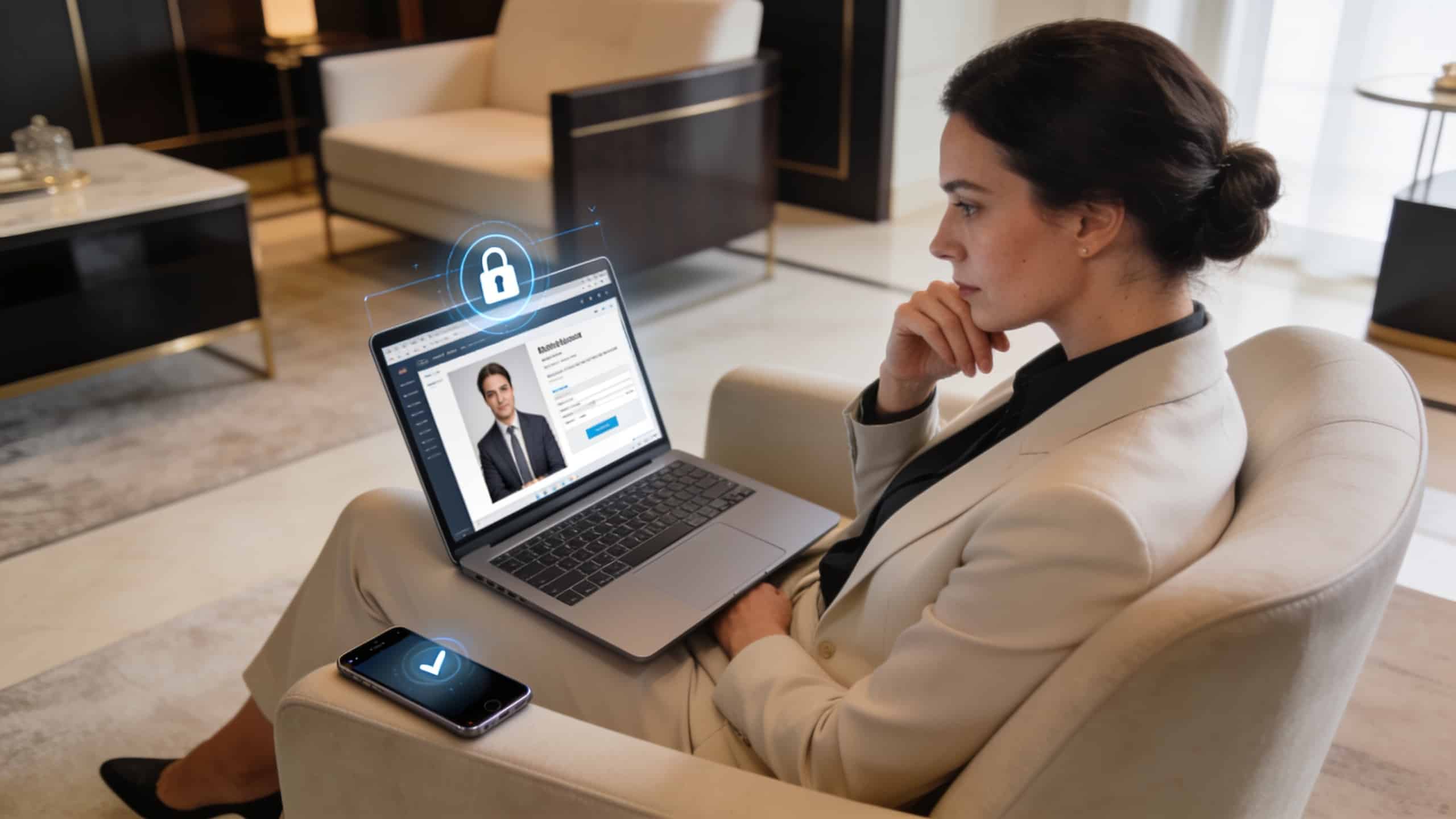
Finding an online profile is easy. Knowing whether the information behind that profile is reliable requires a little more attention.
Before making contact with an escort service or individual profile, taking a few reasonable verification steps can help reduce the risk of misleading information, impersonation, unnecessary privacy exposure or uncomfortable communication.
This guide explains how to verify an escort profile using practical checks that focus on consistency, transparency, privacy and responsible communication.
Why Escort Profile Verification Matters
Online profiles can present attractive photographs, detailed descriptions and convincing information, but appearance alone does not establish authenticity.
A profile may contain outdated information, copied photographs, exaggerated claims or details that are difficult to verify.
Profile verification is therefore not about assuming that every profile is fake. It is about gathering enough reasonable information before deciding whether you are comfortable continuing a conversation.
1. Start With the Profile Information
Read the complete profile rather than focusing only on photographs.
Look for information that is reasonably consistent across the profile, including location, description, communication details and the type of service or interaction being described.
Be cautious when important details appear vague, contradictory or repeatedly change during communication.
A professional-looking profile should generally communicate information in a clear and consistent way.
2. Check Whether the Photographs Appear Consistent
Photographs are one of the most important areas to examine when conducting online profile verification.
You do not need sophisticated technology to notice basic inconsistencies.
- Look for major differences in appearance between photographs.
- Check whether lighting, surroundings and image quality appear unusually inconsistent.
- Be cautious when every photograph appears professionally produced but there is little supporting information.
- Look for obvious signs that photographs may have been heavily edited.
- Consider whether the photographs appear connected to the same person or profile.
None of these observations alone proves that a profile is fraudulent. They are simply reasons to investigate further before sharing personal information.
3. Look for Consistency Across the Website
If the profile is presented through a website, compare the information with the site’s other relevant pages.
Check whether names, locations, contact methods and descriptions are reasonably consistent.
For example, a service’s main information should not contradict important details presented on its individual profile or location pages.
You can also review pages explaining the organisation’s approach, such as an About page or Services page.
4. Pay Attention to Communication Quality
The way someone communicates can provide useful context.
Professional communication should generally be understandable, respectful and consistent with the information already presented.
Take extra care if communication suddenly becomes confusing, contradictory or unusually aggressive.
You should also be cautious if someone immediately pressures you to provide sensitive information without first establishing a clear reason for requesting it.
5. Be Careful With Urgency and Pressure
Pressure is an important warning sign in many online interactions.
If someone insists that you must immediately provide personal information, send money or make a decision without enough time to review the details, slow down.
Legitimate communication does not need to rely on unnecessary urgency.
Taking a few minutes to review information can help you make a more informed decision.
6. Never Share Account Security Information
Profile verification should never require you to compromise your own digital security.
Never provide passwords, banking login details, PINs or one-time verification codes to another person.
Be particularly careful if someone claims that a password or verification code is necessary to confirm your identity when there is no clear legitimate reason for the request.
Protecting your own accounts should always take priority.
7. Check the Website’s Privacy Information
Verification should include understanding how your own information may be handled.
Before submitting personal details through a website, review its privacy policy and understand what information is being requested.
Ask yourself:
- Why is this information being collected?
- Is it actually necessary?
- Does the website explain how information is used?
- Are there clear contact details?
- Does the website provide relevant terms or privacy information?
Good escort privacy practices begin with limiting unnecessary information sharing.
8. Avoid Sending Sensitive Documents Without a Clear Reason
Identification documents and other sensitive records contain information that can be misused if they fall into the wrong hands.
Do not send copies of passports, driving licences, bank documents or similar records simply because someone asks for them.
If a request seems unnecessary or poorly explained, ask why the information is required and consider whether there is a safer alternative.
9. Search for Contradictions Rather Than Looking for Perfection
Online verification is rarely about finding a profile that looks perfect.
Instead, look for contradictions.
Does the location change? Do photographs appear unrelated? Does the communication contradict the published information? Are important details repeatedly changed?
One small inconsistency may have an innocent explanation. Several unexplained inconsistencies deserve greater caution.
10. Be Careful With Duplicate or Suspicious Profiles
One useful verification step is checking whether similar profiles appear elsewhere using the same photographs, descriptions or contact information.
Duplicate profiles do not automatically prove fraud. Some people or businesses may legitimately appear on multiple platforms.
However, if the same photographs appear alongside completely different names, locations or identities, further verification is sensible.
The important point is to compare information rather than relying on a single profile.
11. Verify Contact Details Carefully
Pay attention to whether the contact information matches the website or profile you originally found.
Be cautious if communication suddenly moves to unrelated accounts or if a new contact claims to represent a service without any clear connection to it.
When something changes, return to the original source and compare the information before continuing.
12. Protect Your Location During Early Communication
Profile verification and privacy should happen together.
There is generally no reason to provide your exact home address, workplace or detailed daily routine during initial communication.
Start with only the information necessary for the conversation and provide additional details only when there is a legitimate need.
For more privacy guidance, read our article on how to protect your privacy when using an escort service.
13. Do Not Treat a Professional Website as Proof of Everything
A polished website can create a sense of credibility, but design quality alone does not verify every claim made on a website.
Look beyond appearance.
Check whether the website provides consistent information, clear policies, appropriate contact information and useful details about its services and approach.
A professional appearance should be considered alongside other verification factors rather than treated as proof by itself.
14. Understand the Difference Between Verification and a Guarantee
Verification is about reducing uncertainty. It cannot eliminate every possible risk.
No website, profile or communication method can reasonably guarantee that an online interaction will always be completely risk-free.
Be cautious of claims involving absolute guarantees, perfect anonymity or zero risk.
A more realistic approach is to look for transparent information and make decisions based on multiple reasonable signals.
15. Use a Simple Verification Checklist
Before making contact, ask yourself the following:
- Does the profile information appear consistent?
- Do the photographs appear to belong to the same profile?
- Are the location and contact details clear?
- Does the website provide privacy information?
- Are there clear and reasonable ways to communicate?
- Has anyone pressured me for sensitive information?
- Have I been asked for passwords, PINs or verification codes?
- Have I noticed unexplained contradictions?
- Am I being pressured to make a quick decision?
- Am I sharing more personal information than necessary?
If several answers raise concerns, take a step back before continuing.
What to Do If You Suspect a Fake Escort Profile
If a profile appears suspicious, avoid escalating the situation by sharing additional personal information.
Save relevant information if you need it for your own records, stop communicating if necessary and avoid sending money or sensitive documents while the situation remains unclear.
If you believe an account or profile is impersonating someone, use the reporting mechanism of the platform where you found it when appropriate.
You can also read our detailed guide, How to Spot a Fake Online Profile, for additional warning signs.
How Verification Fits Into Escort Safety
Escort profile verification is only one part of responsible online safety.
It works best alongside privacy protection, clear communication and sensible boundaries.
Our broader guide, The Complete Guide to Safe & Discreet Escort Services in Punjab, covers these areas in greater detail.
The basic principle is simple: verify information before trusting it, protect your personal details and do not allow pressure to replace careful decision-making.
Final Thoughts
Learning how to verify an escort profile does not require complicated tools. Careful observation, consistency checks and sensible privacy habits can go a long way.
Look beyond photographs, compare information, protect your digital accounts and pay attention to unexplained contradictions or pressure.
Most importantly, remember that online verification reduces uncertainty rather than eliminating risk completely. Taking your time and sharing information selectively can help you maintain greater control over your online interactions.
Leave a Reply